The fire risk profile of modern healthcare facilities represents a complex, high-stakes challenge. Unlike typical…
Commercial Fire Alarm System Design for Your Business
Commercial fire alarm system design is the process of creating a fire safety solution for your business that uses devices such as smoke detectors, heat detectors, and manual call points to detect fire quickly and support a fast response. As a business owner or decision-maker responsible for fire protection, you need a system that fits your building, daily operations, and compliance requirements—not just a standard package.
Choosing the right commercial fire alarm system affects life safety, business continuity, regulatory compliance, and the cost of fire-related damage or downtime. In this blog, we’ll walk through how to evaluate your fire security needs, understand fire detection technology, compare types of commercial fire alarm systems, weigh the key factors that influence system selection, and account for local fire codes and integration with other building systems. Continue reading below and discover how U.S. Protective Services can help you choose the ideal commercial fire alarm system that protects your people, property, and operation.
Evaluating Your Business’s Fire Security Needs
Before diving into the myriad of commercial fire monitoring solutions and emergency alarm systems available, it’s imperative that you understand your business’s unique fire security needs. An accurate assessment serves as the compass directing you toward the right fire safety infrastructure. Let’s start with the size and layout of your establishment.
Assessing the Size and Layout of Your Premises
It stands to reason that the complexity of your emergency alarm system will correlate with the size of your business. If your operation spans multiple floors or buildings, you’ll require a sophisticated system capable of monitoring every corner of your commercial space.
Conversely, a compact single-story shop might need a less intricate setup. Effective fire alarm system design should account for building size, layout, ceiling height, and occupancy type. Think of your premises as a blueprint for your fire security strategy, with those factors guiding the right level of coverage and device placement for each area.
Understanding Local Fire Codes and Regulations
Your diligence in complying with local fire codes isn’t just about ticking boxes; it’s about ensuring the safety of your staff and patrons while safeguarding your investment. These regulations dictate the minimum requirements for commercial fire protection in your area and, in the U.S., are typically guided by NFPA 72 as the primary standard governing fire alarm system design, including requirements related to the fire alarm control and other alarm components. Familiarity with these laws is non-negotiable, as non-compliance can lead to fines, liability issues, and, most critically, compromised safety. Regular inspections, along with proper system installation, maintenance, and alarms, also help verify continued compliance with local regulations.
Identifying Potential Risks and Fire Hazards
Each business comes with its own set of risks and potential fire hazards. Whether it’s the stockpile of combustibles in a storeroom or the high-heat equipment in a restaurant kitchen, identifying these risks is crucial. A formal risk assessment helps match the system’s coverage to the specific hazards present.
Pinpointing hazard zones within your business landscape will inform the complexity and scope of the emergency alarm system you’ll need to mitigate these risks effectively. L2 systems are often used to cover escape routes and other high-risk areas identified during the review. This level of tailored insight will form a solid foundation required for robust commercial fire monitoring solutions. Category P systems focus on property protection, while Category L1 fire systems require detection throughout all building areas. P1 systems provide full coverage, including areas such as roof spaces.
Understanding Fire Detection Technology
When you’re tasked with choosing the right fire alarm system for your business, a deep understanding of fire detection technology is not just helpful—it’s crucial. Advanced fire detection systems are designed to detect fires early, limit damage, and protect lives.
By understanding how each component of fire detection technology operates, you can make an informed decision that enhances your emergency alarm system’s effectiveness, as these systems form an integrated network of detectors, manual activation points, and notification components.
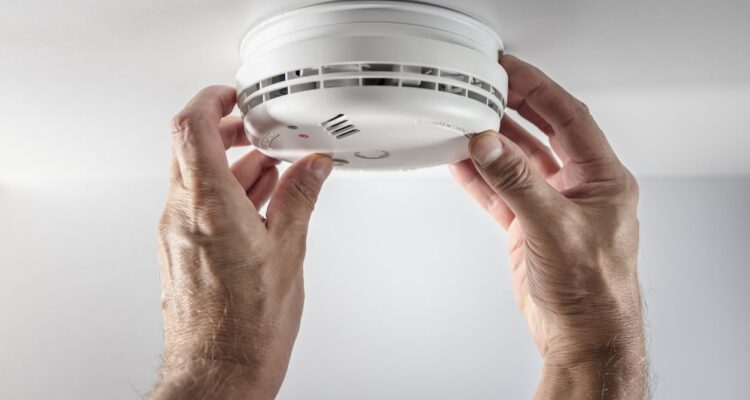
- Smoke detectors are the first line of defense in fire detection technology. They use optical or ionization technology to detect smoke particles in the air long before flames become visible, and some life safety systems also include carbon monoxide detection.
- Optical smoke detectors are more responsive to smoldering fires, while ionization smoke detectors are faster at catching flames. It’s not a question of which one is better, but rather which one is more suited to your specific environment.
- Carbon monoxide detectors typically use electrochemical sensors.
- Heat detectors, on the other hand, identify a rapid increase in temperature or a threshold temperature that indicates a fire. These are ideal in environments where smoke detectors could be triggered by routine dust or steam, such as kitchens or industrial areas.
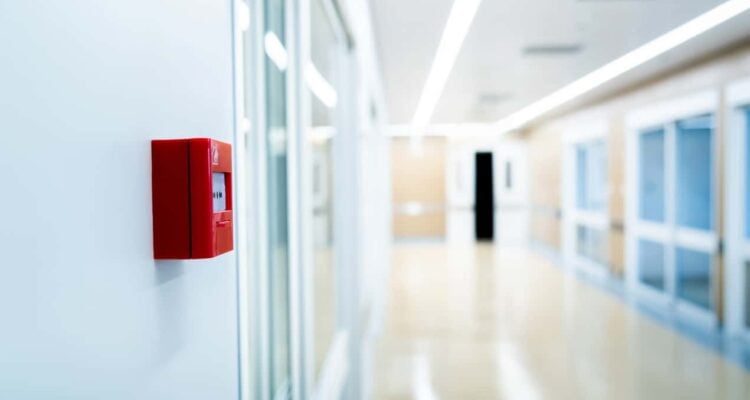
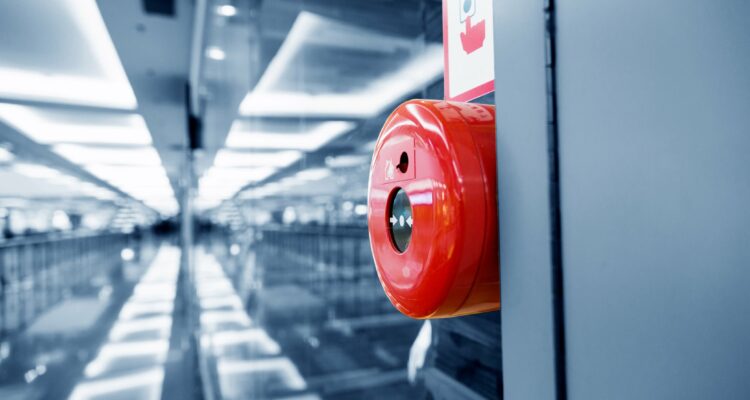
- Manual call points are fire alarm devices that serve as a manual override, and pull stations allow occupants to trigger an alarm when they spot danger. This adds an essential layer of safety, creating a multifaceted approach to your emergency alarm system.
Types of Commercial Fire Alarm Systems
Understanding the different types of commercial fire alarm systems is critical for selecting the right fire safety solutions for your business. Three common systems at the forefront of commercial fire protection include conventional, addressable, and wireless fire alarms. Each system brings a unique set of features and capabilities that align with different commercial needs.
Conventional Fire Alarm Systems: Uses a simple setup where zones are hardwired to the control panel, and the fire alarm control panel receives signals from field devices and indicates the affected zone. Each zone indicates a general area in your establishment, making it easier to pinpoint the location of a fire. Ideal for smaller businesses or facilities with a straightforward layout, these systems are cost-effective and have been a long-standing choice in fire safety.
- Simplicity in design
- Cost-effective for small premises
- General location indication
Addressable Fire Alarm Systems: The fire panel serves as the central point, identifying the exact initiating device because each alarm device has an address. This system is highly effective for larger spaces, complex building layouts, or where detailed information is critical during an emergency.
- Precise location identification
- Programmable elements for flexibility
- Detailed monitoring and reporting capabilities
Wireless Fire Alarm Systems: Offer flexibility and ease of installation, as they don’t require physical cables to connect sensors and alarms. Cutting-edge radio frequency technology maintains reliability, and because it minimizes disruption, it’s excellent for businesses where maintaining aesthetic integrity is necessary, such as in historic buildings. Such systems still need dependable power, including a primary source and a reliable secondary battery backup.
- Flexible and minimally invasive installation
- Highly adaptable to environmental changes
- Ideal for maintaining building aesthetics
Professionally monitored systems can notify emergency services immediately when alarms are verified or transmitted.
System Comparison Matrix
| Feature / Criteria | Conventional Systems | Addressable Systems | Wireless Systems |
| Core Technology | Hardwired zones connected directly to a central control panel. | Devices assigned unique digital addresses linked to a central panel. | Communicates via secure radio frequency (RF) technology without physical data cables. |
| Location Precision | General Area: Indicates the overall zone (e.g., 2nd Floor West). | Exact Device: Identifies the precise device triggered (e.g., Smoke Detector #14, Room 204). | Exact Device: Provides individual device tracking similar to addressable systems, without physical wiring. |
| Key Advantages |
• Simple design and straightforward operation
• Cost-effective for smaller spaces
• Reliable, long-standing industry standard |
• Pinpoint accuracy during emergencies
• Programmable flexibility
• Detailed system monitoring and event reporting |
• Minimally invasive, rapid installation
• Easy to adapt or relocate during renovations
• Preserves interior building aesthetics |
| Power Requirements | Hardwired to primary panel power with battery backup. | Hardwired to primary panel power with battery backup. | Requires a primary power connection and reliable secondary battery backups for sensors/transmitters. |
| Ideal Application | Small businesses or facilities with simple, single-story layouts. | Large facilities, multi-story buildings, or complex layouts needing detailed tracking. | Historic structures, high-end retail, offices with strict aesthetic needs, or temporary setups. |
Factors to Consider When Choosing a System
When selecting the best commercial fire alarm system for your business, you should weigh several critical factors. Below, we’ll break down the essential components to ensure the system you choose not only aligns with industry standards but also fulfills your specific operational needs efficiently and effectively.
Alarm System Features
The features of a commercial fire alarm system can significantly impact its performance and reliability. Consider what types of notification appliances are most appropriate for your business—do you need audible alerts, visible notification, or more specialized methods to indicate an alarm condition? Fire alarm sounders should achieve at least 65 dBA in occupied areas, and evacuation signals commonly follow the NFPA 72 three-pulse cycle. Audio alarms and visual strobes are common, and some systems also use tactile or olfactory stimuli for specialized environments. For visual coverage, wall-mounted devices should be selected and placed correctly, and Visual Alarm Devices should meet EN 54-23 light output requirements. Examine the accessibility of the control panels to ensure that they can be operated intuitively during emergencies. In larger or more complex facilities, a voice evacuation system may be a better fit, and some jurisdictions require it in high-occupancy facilities. These systems broadcast pre-recorded messages during emergencies to alert building occupants and guide evacuations with different tones when needed. That added clarity can help reduce confusion and fatigue from false alarms compared with traditional horn/strobe-only alerts for building occupants.
Integration with Building Management Systems
For advanced commercial spaces, the integration with building management systems (BMS) is not just an added benefit—it’s essential. This kind of integration enables a seamless operation where safety mechanisms work in concert with other building services, often including door releases and HVAC shutdown during an alarm event. When your commercial fire alarm system communicates effectively with the BMS, you not only enhance the safety of occupants but also ensure that fire response procedures are executed with precision. To support system integrity during that sequence, system designers should coordinate these interfaces and document them clearly on floor plans with device locations.
Cost Considerations and Budgeting
While advanced features and system integrations offer greater safety and convenience, they must also align with your financial limitations. Developing a budget that encapsulates both the initial installation cost and ongoing fire alarm system maintenance fees without compromising on quality is paramount. Annual system certification may also be required as part of ongoing maintenance and compliance planning. Balance the necessity for a sophisticated fire alarm system with your available resources, ensuring you invest in a solution that offers optimal protection and longevity, with maintenance serving as an essential component of long-term reliability.
U.S. Protective Services — Leading the Way in Commercial Fire Alarm Systems
The pivotal aspects of equipping your business with adequate fire safety solutions underline the necessity of a well-thought-out approach toward commercial fire protection. As you move forward in safeguarding your operations and your people, remember that a commercial fire alarm system is a crucial part of broader life safety systems for commercial buildings. This deliberate approach will solidify your commitment to excellence in commercial fire protection, ensuring that you’re well-prepared for any fire-related emergency.
With over 50 years of experience in designing top-tier commercial fire alarm systems, U.S. Protective Services supports comprehensive fire alarm system planning, installation, and maintenance for commercial buildings. Our expertise in residential security solutions and commercial fire alarm systems means we can offer you a system that not only meets but exceeds your expectations, with each element serving as an essential component of a code-compliant strategy.
Don’t leave the safety of your business to chance. Over 470,000 structure fires occur annually in the U.S., which is why comprehensive fire detection matters. Contact us today to learn more about how we can protect your business with a state-of-the-art commercial fire alarm system, installed to protect people and property as part of a comprehensive fire detection approach. Let us be your partner in security, providing you with a system that’s not just a response to emergencies but a prevention strategy tailored to your specific needs.

Related Posts